Located in the heart of northern Kandiyohi County, Prairie Woods Environmental Learning Center spans a magnificent 560 acres of diverse terrain, serving as a hub for environmental education and outdoor discovery. As a 501(c)(3) nonprofit, we are closely connected to our local community and proudly offer our educational and recreational programs to groups throughout Minnesota. We cater to groups through reservation-based, tailored programs and invite walk-in visitors to explore our scenic trails all year round.
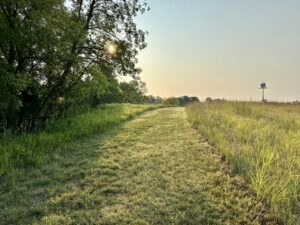
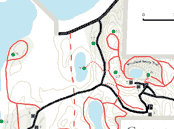
At Prairie Woods, our landscape is adorned with the beauty of rolling glacial formations, native prairie, lush woodlands, lively wetlands, and pristine shorelines, establishing us as a top outdoor destination for more than thirty years. With 11 miles of natural surface trails designed for hiking, biking, skiing, and more, we invite people of all ages to connect with nature.
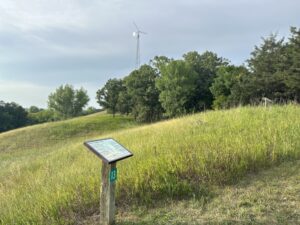
Prairie Woods Environmental Learning Center is located on land with deep historical and cultural significance. This area is within the traditional homelands of the Dakota people and has long been important to the Ojibwe people as well. This landscape, shaped by glaciers thousands of years ago, includes rolling prairies, forests, wetlands, and lakes that have supported people and wildlife for generations.
Archaeological evidence shows that people have lived in this area for thousands of years, including during the Paleoindian, Archaic, and Woodland periods. For thousands of years, Tribal Nations lived in relationship with this land and its ecosystems, developing a deep knowledge of the environment and a lasting legacy of stewardship.
In 1871, Swedish immigrants from the Danielson family began farming this land. The Danielson family cultivated the area until the late 1980s, after which the land was transferred to Kandiyohi County. This transition led to the founding of Prairie Woods Environmental Learning Center in 1992, with a mission to foster understanding, appreciation, and stewardship of the natural world.
Today, the original farmstead — including the historic barn and majestic bur oak trees — remains an important part of Prairie Woods. A restored log cabin commemorates the Danielson family’s first home on this land and serves as a reminder of the agricultural history of the area.
At Prairie Woods, we recognize and respect the many layers of history that have shaped this land, from its ancient human history to its agricultural past and its present role as a place for education, conservation, and outdoor recreation. We are committed to caring for this land and helping future generations build a connection to the natural world.
Prairie Woods Environmental Learning Center is located in Minnesota’s Prairie Pothole Region, a landscape shaped by glaciers and known for its rolling hills, wetlands, prairies, and forests. This region was once covered by vast native prairie and wetlands that supported an incredible diversity of plants and wildlife. Today, less than 1% of Minnesota’s original tallgrass prairie remains, making the remaining natural areas at Prairie Woods especially important for wildlife habitat, water quality, and environmental education.
Prairie Woods works to care for and improve the natural habitats on the property, including prairie, forest, and wetland areas. This work includes planting native prairie grasses and wildflowers, managing invasive species, and protecting the health of our lakes and wetlands. These efforts help provide habitat for birds, pollinators, and other wildlife, and also serve as outdoor classrooms for students and visitors.
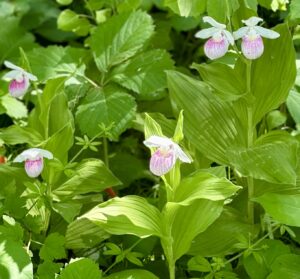
The unique landscape at Prairie Woods includes glacial hills and kettle depressions, native prairie, wetlands, and forest where the prairie meets the Eastern Broadleaf Forest. These diverse habitats support a wide variety of native plants and wildlife, including species such as the showy lady’s slipper and pasque flower, as well as pollinators that depend on native prairie plants, such as the regal fritillary butterfly, which relies on prairie violets for survival. Rare habitats such as oak savanna can also be found in this transition zone between prairie and forest.
We are also committed to protecting the natural shoreline of Lake Florida and maintaining the scenic and ecological value of this area for future generations.
Prairie Restoration in Progress
A major prairie restoration project is currently underway on the property through a partnership with Pheasants Forever, supported by habitat restoration grants. Areas of non-native grass are being restored to native prairie grasses and wildflowers. This multi-year effort will improve habitat for pollinators, birds, and other wildlife while enhancing the natural beauty of the site.
At times, restoration areas may look rough as native prairie is established, but this is a normal part of the restoration process. Prairie Woods works with partners and volunteers on habitat projects, including prairie burns and native plant restoration, as part of long-term stewardship of the land.
Prairie Woods serves as a place where people can learn about prairies, forests, wetlands, and the importance of caring for our natural resources.

By joining Prairie Woods, you become part of a community dedicated to preserving the beauty and diversity of our natural world. Your membership supports our mission to connect people to nature, ensuring the wonders of Prairie Woods can be enjoyed for generations to come.